
No Official Long County Arrest Log
Long County has no complete official booking blotter. What exists instead is announcement-style coverage. The sheriff's office posts items through its LCSO press-release index. The Facebook News route carries public-safety updates too. Neither one promises a fixed archive, a full list of bookings, or the same fields for every arrest. That gap shapes how the pages read. A press release usually spotlights one operation. That might be a warrant sweep or a major case. It often runs after the fact. So the date on the post is not the arrest date. Facebook adds its own friction. Older posts can be hard to pull up in order without platform access.
The official LCSO News destination is represented by the captured landing state.
This capture illustrates the announcement route, not a complete or certified arrest archive.
Search Long County Multi-Day Arrests
Start with the question you actually need answered. Let official channels lead, and tag every secondary source with its own date and limits.
- Search the LCSO press-release index and official Facebook News channel by event, agency, or approximate date.
- Check the 24 Hour Arrests route only for current custody. A current roster is not an archive.
- Use the official court gateway for later filings and disposition. Keep the case date separate from the arrest date.
- For an existing older record, submit a focused request to LCSO or the receiving jail that holds it.
- Review local news for narrative context after official sources, then verify names, dates, agencies, and charges.
- Use a third-party index only as a discovery lead. Never treat its empty page or profile as the official Long County log.
Stretch the window when a delayed announcement might land. Long County has no documented weekend arrest schedule, so a Monday post may not cover Friday through Sunday bookings at all. Check each date and read the event date inside the story.
Long County Arrest Entry Checklist
Fields vary because no uniform blotter exists. News stories lean narrative, court dockets track proceedings, and booking records track custody. Keep those differences straight when a name spans several days.
| Item | How to read it |
|---|---|
| Name and identifier | Confirm identity; avoid combining similar names |
| Event, arrest, and booking dates | Separate timestamps that may occur on different days |
| Arresting agency | Identifies the likely report custodian |
| Charge wording | An charge as stated by the source |
| Housing location | A custody clue that can change after transfer |
| Article publication date | When news appeared, not necessarily when arrest occurred |
| Court case and disposition | The later proceeding and result, not a booking fact |
| Photograph | No verified official Long County booking-photo feed was found |
Charges can change after booking. They get amended, reduced, or dismissed. The Georgia Courts eAccess gateway is the official route to Long County State and Superior court records. Treat it as the case layer, never as the arrest log itself.
Selective Long County Arrest News
Regional newspapers cover arrests one story at a time. There is no daily roster among them. Coastal Courier local news is the most consistent outlet for Long County public-safety coverage. WTOC and WJCL have each reported individual Long County arrests. The Long County Press runs local news and notices without a booking log. News reporting has real strengths here. It names the agency involved and explains how an arrest unfolded. It cannot account for every booking, though. Headlines often compress the situation. A photo accompanying a story may be a supplied image, a file photo, or a scene shot rather than a booking photograph. Note both the publication date and the reported event date. The Coastal Courier news index gives a sense of that regional stream.
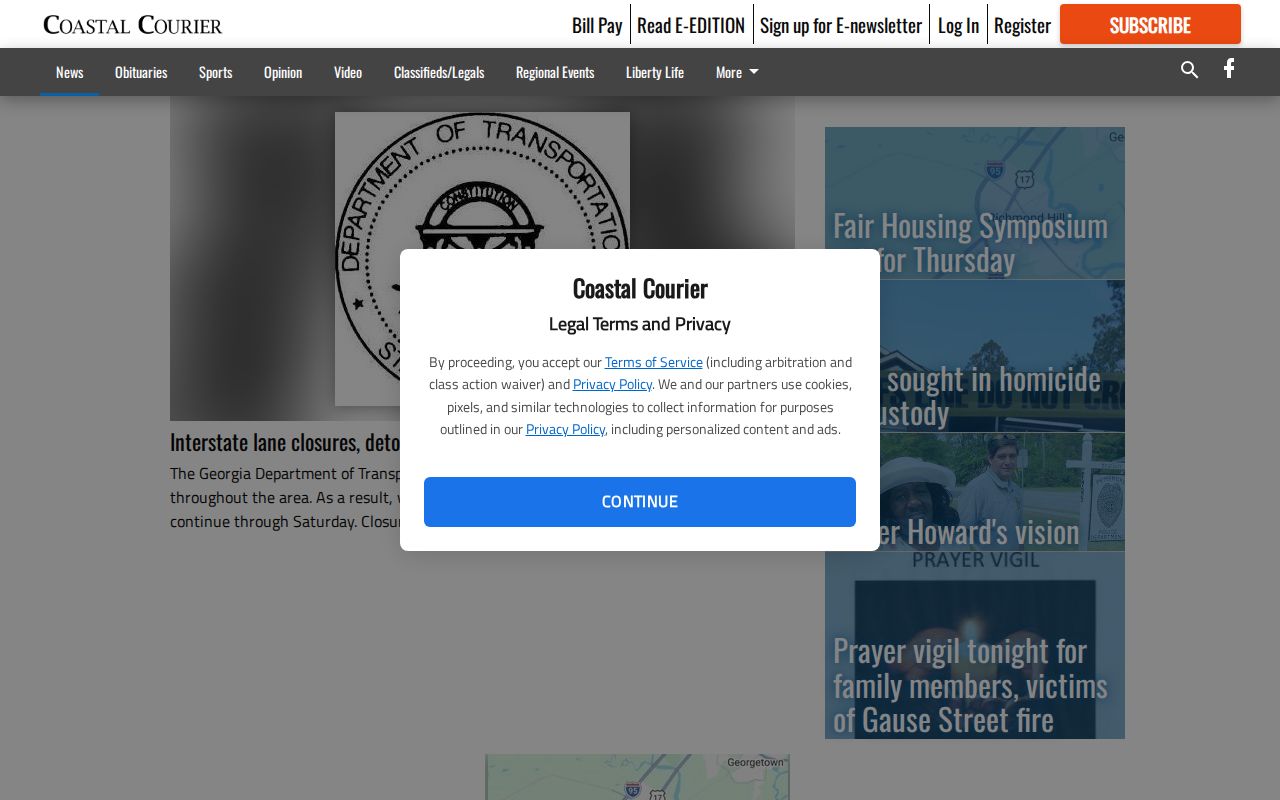
Treat news coverage as context, never as a custody roster. A report of an arrest is only the start of the record. The court file tells the rest of the story.
Unofficial Thirty-Day Arrest Window
RecentlyBooked's Long County page claims a rolling 30-day window with several refreshes a day. It also states plainly that Long County does not provide mugshot images. Those are private-site claims, not an official arrest count. Derivative pages have their own problems. They lag, keep stale records, or miss a booking entirely. The other big services do not close the gap either. Busted Newspaper's Georgia hub skips Long County. Georgia Arrests.org offers only statewide controls. The Mugshots.zone county path bounces to the homepage. Older Georgia Jail Roster and Jail Exchange pages list housing details. Those details clash with current official information. The unofficial Long County derivative page is best checked after the official channels.
A private display like this shows only what the service listed. It proves nothing about who was or was not arrested.
Conflicting Long County Housing Lists
A multi-day search may cross jail transfers. The current LCSO jail and bonding page says Long County runs no jail of its own. It names Tattnall, Wayne, Appling, McIntosh, and Screven county jails as housing options. An older official page named a different set, including Liberty and Ware. Trust the current page first. Even dated lists are just evidence of where someone was held. They are not a final answer. Call LCSO at 912-545-2118 to find the receiving facility and any Long County hold. A receiving-jail record can pin down custody on a given date. It still says nothing about how the case ends. A third-party "housed in Tattnall" tag is only a lead until confirmed.
- Booking
- The intake process after an arrest.
- Transfer
- A move between custodians or facilities.
- Disposition
- The court’s later resolution of a charge.
- Retention
- How long a custodian must keep a record, not how long it stays online.
Long County Arrest Archives
How long does a county keep its arrest paperwork? The Georgia Archives public-safety schedule answers that in part. Incarceration lists stay on file for one year. Jail booking records are kept ten years after release, and jail registers ten years past the final entry. Holding-cell video has the shortest life. That material is preserved just 180 days.
| Record series | Scheduled retention |
|---|---|
| Incarceration lists | 1 year |
| Jail booking records | 10 years after release |
| Jail registers | 10 years after last entry |
| Holding-cell videos | 180 days |
Older Long County arrest records rarely sit in a state vault. The Georgia Archives keeps few of them. The local custodian holds most. Ask the sheriff's office which agency has the booking record or hold record you need. A jail that took someone into custody may have built its own file. A second request sometimes helps. Give rough dates and name the agency that made the arrest. Keep the ask simple. No office will build a custom historical blotter for you.
For the state rules, the Georgia Open Records request page lays out the framework. Court files can be searched on their own track. A cached page or copied profile from a search engine is not a certified archive. But it can linger after the official record moves.